


Review: A Blind Bargain Reimagines Psychological Horror Through a 1970s Lens

Updated: May 16

Review: A Blind Bargain
There are certain actors who immediately change the atmosphere of a film the second they appear on screen, and Crispin Glover has always been one of them. Whether audiences know him from Back to the Future, Willard, or his long history within cult and genre cinema, Glover has consistently carried an unpredictable quality that makes even the strangest material more compelling to watch.
That energy is fully present throughout A Blind Bargain, director Paul Bunnell’s reimagining of the lost Lon Chaney psychological thriller.
Set against the backdrop of 1970s California, the film follows a troubled Vietnam veteran who makes a horrifying decision involving his aging mother and a mysterious doctor promising youth, transformation, and rebirth through increasingly disturbing methods. The story leans heavily into psychological horror, exploitation cinema aesthetics, and surreal period atmosphere while building a world filled with eccentric personalities and morally damaged characters.
The strongest aspect of A Blind Bargain is easily its atmosphere.
From the cars and wardrobe to the hairstyles, lighting, interiors, and overall visual texture, the film commits completely to recreating the feel of 1970s Hollywood excess and decay. Shot on Kodak film, the production carries an authentic grain and warmth that helps the movie feel less like a recreation and more like a forgotten artifact pulled directly from that era.
Cinematographer Francisco Bulgarelli deserves major credit for how immersive the visual presentation becomes. The film constantly balances beauty and grime together in a way that mirrors the story’s themes of vanity, desperation, and self-destruction.
Crispin Glover delivers exactly the type of performance audiences would expect from him in material like this. His presence as the doctor immediately gives the film an uneasy quality, and he fully embraces the bizarre, theatrical tone the story requires without ever making the character feel cartoonish.
Jake Horowitz anchors the emotional side of the film as a deeply flawed man spiraling through addiction, selfishness, and guilt, while Annalisa Cochran and Lucy Loken both help strengthen the film’s shifting emotional and psychological layers.
The supporting cast also adds a strange charm that fits the movie’s overall tone. Rob Mayes especially stands out in an over-the-top role that injects bursts of dark humor and absurdity into the increasingly uncomfortable narrative.
What makes A Blind Bargain work best is that it never feels overly polished. The film embraces the rougher edges of exploitation horror, psychological melodrama, and vintage genre filmmaking. That approach helps the story maintain a playful unpredictability even as darker themes begin taking over the narrative.
For audiences who appreciate retro horror aesthetics, practical atmosphere, and period-driven psychological weirdness, there is a lot here to enjoy.
The film also succeeds at making viewers curious about the original lost Lon Chaney version, which feels fitting considering how much love and attention clearly went into recreating the spirit of early psychological horror storytelling through a 1970s lens.
A Blind Bargain earns 3.5 out of 5 stars from Horror Movies Uncut. It is a visually committed, atmosphere-heavy psychological horror film that fully understands the type of world it wants to create and stays locked into that vision from beginning to end.


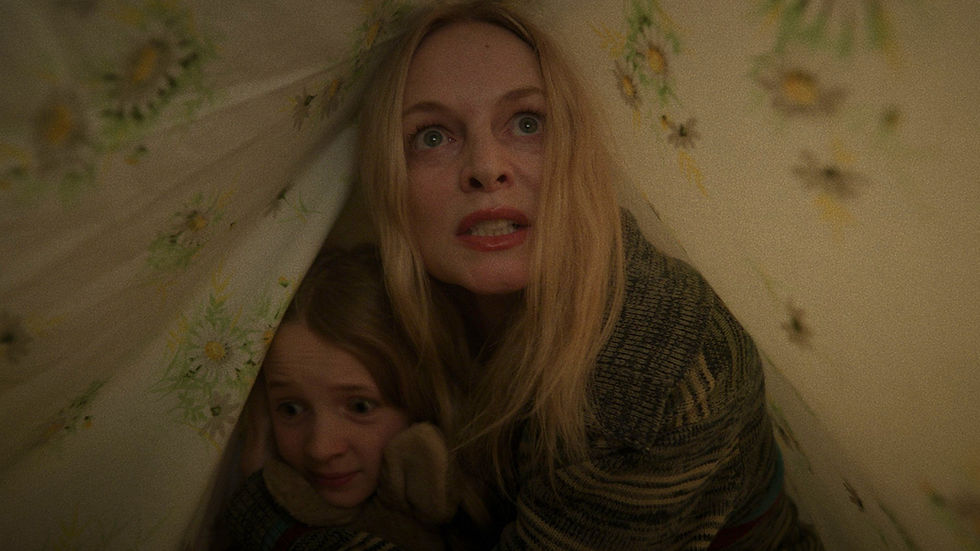
A Blind Bargain's success is perhaps due to its understanding of
survival racethe paranoia cinema spirit of the 1970s: cold, detached camera work, suffocating atmosphere, and characters trapped in a state of moral ambiguity.