


Review: The Mummy Reimagines the Classic as a Possession Horror Hybrid


Review: The Mummy — Lee Cronin Reworks the Myth Into a Possession-Driven Horror Hybrid
Reimagining The Mummy has always come with expectations. With Lee Cronin stepping in to deliver a new version, the direction is clear early—this is not connected to the adventure-driven legacy of Brendan Fraser’s era. Instead, the film leans heavily into horror, specifically the structure and tone of possession cinema.
The story begins in Cairo, where a young family—Charlie, Larissa, and their children—are living when their daughter Katie mysteriously disappears. The film then jumps forward eight years, relocating the family to Albuquerque as they continue to live with the unresolved trauma of her disappearance.
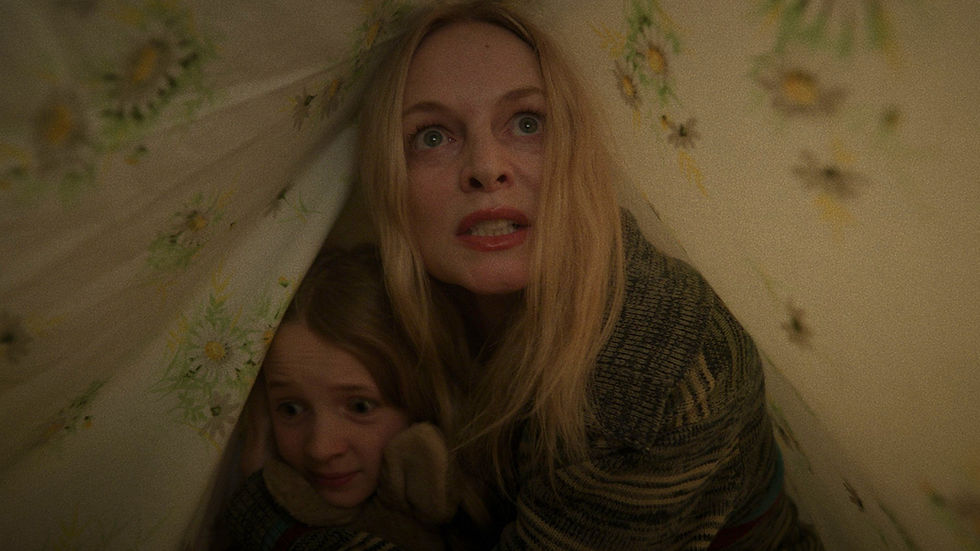
When Katie is eventually found, preserved inside an ancient sarcophagus, the narrative shifts fully into horror. What returns is not the daughter they lost. From that point forward, the film operates within familiar possession territory—behavioral changes, spiritual unease, and escalating supernatural events centered within the home.
Cronin’s approach merges two distinct horror frameworks: the mythology of mummification and the structure of demonic possession. The film reframes the concept of the mummy—not as a reanimated figure seeking vengeance in a traditional sense, but as something closer to a vessel or containment of a deeper, more malevolent force.
This blending of ideas is where the film differentiates itself, but also where it creates friction. The core elements of a mummy story—ancient rituals, curses, and historical mythology—are present, but they are consistently filtered through possession tropes. As a result, the film often feels more aligned with entries in the The Exorcist lineage than with previous interpretations of The Mummy.
Narratively, the film remains straightforward. The family dynamic is central, with themes of grief, trust, and unresolved trauma driving the story forward. The inclusion of extended family—particularly the grandmother figure—adds another layer, grounding the supernatural elements within cultural and spiritual awareness.
The performances hold the film together, especially as the story moves between genres. The emotional throughline remains consistent, even as the tone shifts between possession horror and a reinterpretation of ancient myth.
Where the film becomes more divided is in execution. The blending of possession and mummy mythology doesn’t fully separate into a cohesive identity. Instead of alternating between the two, the film compresses them into a single framework, which may not align with expectations for viewers looking for a more traditional interpretation of either genre.
Technically, the film delivers a standard modern horror package. Sound design plays a noticeable role, though its emphasis does not always translate into stronger overall impact. The film functions best when its visual and narrative elements are working in balance, rather than relying on isolated components.
The Mummy ultimately stands as a reinterpretation rather than a return. It maintains the core idea of consequence tied to ancient forces, but restructures it through a contemporary horror lens focused on possession and domestic tension.
It’s a film that attempts to bridge two established horror traditions into a single story. Whether that approach connects will likely depend on what viewers expect from the title.
Rating: 2.5/5


Comments