


Flapjacks Interview | Fantastic Fest 2026

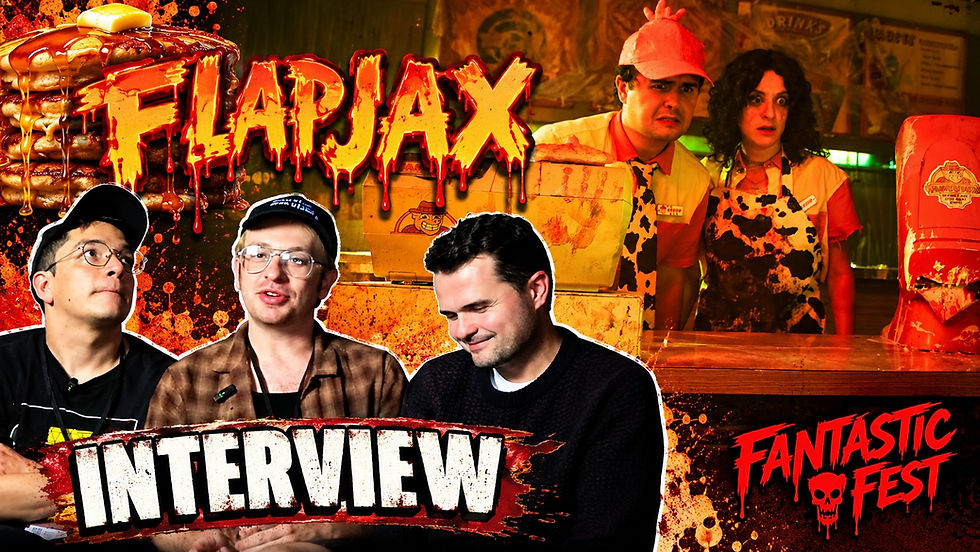
There are plenty of movies about dangerous food, but Flapjax takes the idea considerably further. The grotesque horror-comedy combines melting bodies, questionable pancakes, viral food culture and a surprisingly expansive mythology into the kind of practical-effects-driven genre experience designed to get a crowd reacting together.
During Fantastic Fest, Horror Movies Uncut and The Final Cut sat down with director Rocko Zevenbergen, writer and actor Estevan Muñoz and actor Gabriel Cagan to discuss how the film’s strange world came together, why its abundance of goo needed to remain tactile and what it means to make a movie specifically with an audience in mind.
For Zevenbergen, the mythology surrounding the film’s disastrous food product was never simply additional exposition. If the filmmakers were going to sustain a feature about pancakes capable of making people melt, there needed to be something underneath the initial joke.
“I think we always knew there had to be a backstory,” Zevenbergen told HMU.
That eventually meant expanding beyond the immediate chaos at the restaurant and exploring the scientist connected to the product, his daughter and how that history intersects with Cagan’s character, Arrow.
Muñoz said that development grew naturally from the filmmakers’ character-first approach. Rather than designing an elaborate mythology and inserting characters into it, they considered who these people were before the events of the movie and allowed those histories to expand the world around them.
Arrow sits at the center of much of that madness. Despite the obvious problems surrounding his workplace, he remains remarkably committed to it. Cagan viewed that devotion less as simple denial than as someone sincerely attempting to put something positive into the world.
“He’s trying to give some magic to the world,” Cagan said.
Initially, that means putting his energy into the Humongo Bongo Ball. Once circumstances change, Arrow finds another outlet for that desire — with considerably messier consequences.
And Flapjax is very, very messy.
Zevenbergen cited the scrappy filmmaking of Troma and director Larry Cohen among the influences behind the movie’s deliberately tactile appearance. Working within a low-budget production naturally shaped some of those decisions, but keeping the effects physically present in front of the camera was also fundamental to how he wanted the movie to feel.
“It’s got to be in camera,” Zevenbergen said. “That’s what makes it cinema.”
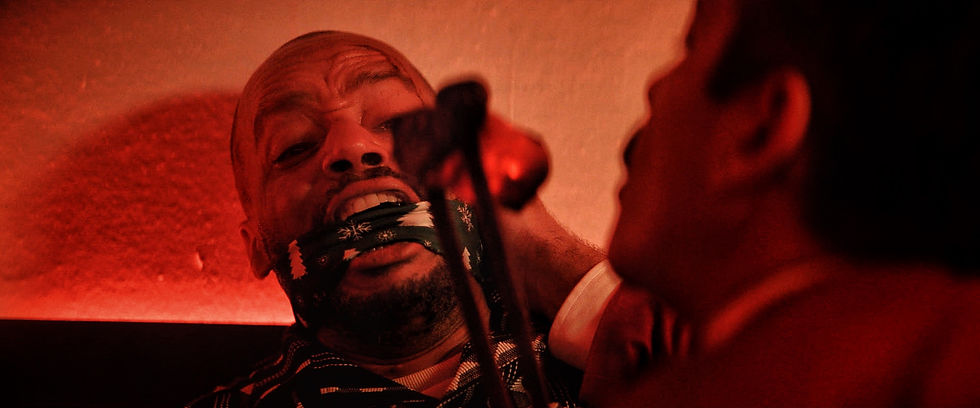
That philosophy leaves Flapjax covered in slime, goo and physical effects that performers could actually interact with rather than relying entirely on digital work to create the movie’s grotesque textures.
The movie’s satire also feels particularly suited to the current food landscape, where a single viral video can transform an otherwise unremarkable restaurant or menu item into a destination with customers waiting hours to get inside.
While Muñoz said that specific connection wasn’t necessarily a conscious starting point for the titular food, Zevenbergen acknowledged that the film’s influencer character was directly informed by contemporary social media culture.
One particular online personality — known for enthusiastically watching trains while filming himself with a GoPro — helped inspire the visual approach. Zevenbergen and cinematographer Brooks Ludwick took the distorted perspective created by the camera and applied it to a food vlogger, resulting in a warped close-up of someone enthusiastically devouring increasingly disgusting food while viewers react through a livestream.
“It’s too easy to parody that kind of thing,” Zevenbergen said.
Away from the restaurant, Flapjax also finds room for an unusual mother-son relationship between Arrow and Georgia Kate’s former techno-diva character.
Cagan described those scenes as an opportunity to shift gears from the more outrageous food-related material. Their relationship could become considerably more intense, but he said the two performers quickly developed an instinctive rhythm together.
That chemistry became apparent almost immediately when one of their earliest scenes involved Kate towering over Cagan, grabbing him by the neck and throwing him around.
“I felt like I’m kind of scared of her,” Cagan joked. “I’m kind of in awe of her, might be a little turned on.”
Muñoz faced a different challenge as both a writer and performer. Despite helping develop the screenplay over several years, he didn’t originally write Zeke with the intention of playing the character himself.
Zevenbergen ultimately pushed him toward the role.
Once cast, Muñoz found himself approaching the performance with an unusually comprehensive understanding of how Zeke functioned within the larger story. Rather than viewing individual scenes in isolation, he already understood how the characters mirrored and contrasted with one another and where Zeke’s journey needed to land within the overall narrative.
That combination of carefully constructed character work and deliberately excessive genre filmmaking ultimately feeds into the kind of experience Zevenbergen wanted Flapjax to provide for an audience.
His previous feature, I Need You Dead!, had intentionally challenged and frustrated viewers. After accomplishing that, Zevenbergen and Muñoz wanted to move in almost the opposite direction.
“Can we make a popcorn movie that a lot of people could come and see?” Zevenbergen recalled asking.
Fantastic Fest provided an appropriate testing ground.
For Zevenbergen, filmmaking remains closely connected to the audience and the question of how to give viewers an experience they haven’t encountered before — something he acknowledged becomes increasingly difficult after more than a century of cinema.
Flapjax may have been particularly suited to the Fantastic Fest crowd and its appetite for unconventional genre filmmaking, but Zevenbergen believes its reach can extend beyond the festival environment.
“As long as you have an open mind and are down for a little craziness,” he said, “the movie is ready to embrace you if you let it.”
Muñoz offered an even simpler description of what they were trying to accomplish.
While writing Flapjax, the filmmakers frequently talked about making a “pop song” rather than merely a popcorn movie: something with a recognizable structure and accessible rhythm, but with enough disruption underneath it to prevent the experience from becoming predictable.
Muñoz is particularly interested in the tension between familiarity and experimentation — taking something that audiences recognize and throwing what he described as “a wrench in the machine.”
That idea ultimately became one of the most concise descriptions of Flapjax itself.
A pop song, only with considerably more dissonance.
And a whole lot more goo.

Looking for your next horror watch? Explore Bloodstream, an HMU streaming partner, for independent horror, cult discoveries, and more.
Affiliate disclosure: Horror Movies Uncut may earn a commission when you subscribe through this link, at no additional cost to you.


Comments