


Review: I Live Here Now Is a Dreamlike Descent Into Fear and Autonomy


Review: I Live Here Now Is a Fever Dream About Fear, Autonomy, and Becoming
Julie Pacino’s I Live Here Now is a visceral kaleidoscope of dread — the kind of film that feels warm on the surface but slowly reveals something far more unsettling underneath.
Originally titled The Crown Inn, this is not a conventional pregnancy story. It’s not sentimental. It’s not framed in pastel joy and sitcom-level reassurance. Instead, Pacino leans into something most films avoid when discussing motherhood: fear. Psychological rupture. The quiet panic that can accompany life-altering news.
Lucy Fry delivers one of her strongest performances as Rose, a young woman navigating pregnancy while wrestling with career ambition, identity, trauma, and the weight of generational expectation. Rose isn’t hysterical. She isn’t weak. She’s suspended in a surreal emotional limbo, and Fry makes that limbo feel both intoxicating and suffocating.
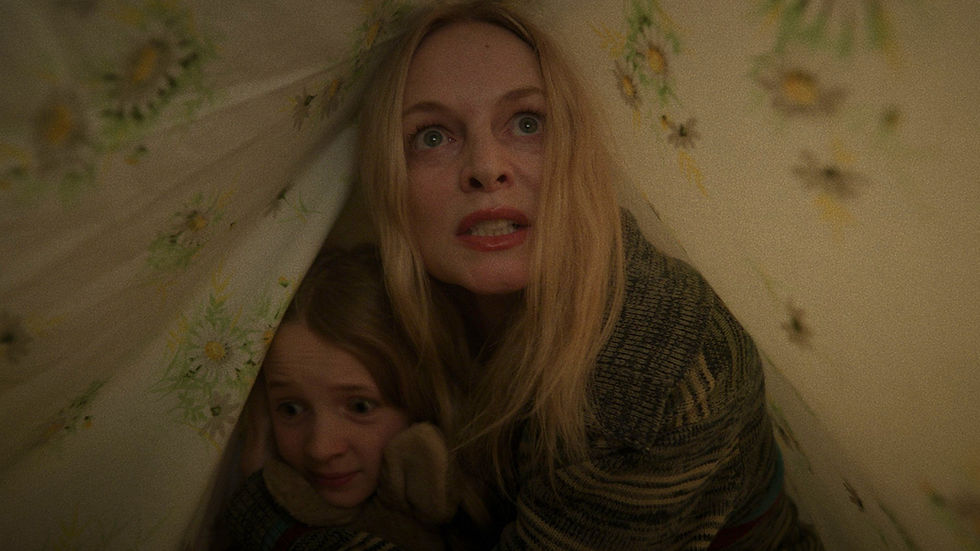
Watching the film, it feels like 9½ Weeks colliding with Suspiria — sensuality tangled with contamination, dream logic bleeding into nightmare imagery. The cinematography bathes everything in warmth at first, but as the film progresses, that warmth begins to distort. Colors feel invasive. Spaces feel claustrophobic. What initially reads as whimsical begins to cast long, ominous shadows.
Pacino isn’t simply telling a story about whether Rose becomes a mother. She’s interrogating autonomy. Who decides what a woman’s life should look like? Who frames pregnancy as destiny versus disruption? How much of what we call “choice” is actually shaped by external pressure?
Madeline Brewer’s Lillian adds an edge of volatility, while Sarah Rich, Sheryl Lee, and Matt Rife populate Rose’s orbit with figures who feel both real and symbolic — embodiments of societal expectations, generational pain, and subtle coercion.
One of the film’s strengths is that it refuses to turn Rose into a victim. She is not helpless. She is navigating. Fighting. Enduring. The horror here isn’t supernatural — it’s psychological and social. It’s about the fear of losing yourself inside a narrative that others have already written for you.
And that’s where the film becomes powerful.
We live in a society that still polices women’s bodies, still shames knowledge about those bodies, still passes down generational trauma disguised as tradition. I Live Here Now doesn’t scream those themes — it submerges you in them.
Is it abstract? Yes.
Is it heavy-handed at moments? Perhaps.
But it’s undeniably relevant.
Pacino is crafting work for audiences who are willing to sit with discomfort — who understand that growth often comes through adversity, and that sometimes nightmares are metaphors for the social structures we refuse to confront.
3.5 out of 5.
A dreamlike, unsettling meditation on identity, pregnancy, and the shadow of expectation — and a reminder that autonomy is rarely handed over peacefully.


Comments