


Slamdance 2026 Review: Clovers Explores America’s Gambling Gray Zone

Slamdance 2026 Review: Clovers Is a Sobering Portrait of America’s Gambling Underbelly
Slamdance 2026 gave us monsters of the real-world variety again — and this time they don’t wear masks. They glow on arcade screens inside strip mall “fish game” casinos.
Jacob Hatley and Tom Vickers’ documentary Clovers quietly embeds itself inside a North Carolina strip mall gambling spot and follows three intersecting lives over the course of several years. What unfolds isn’t sensational. It isn’t flashy. It isn’t even shocking.
It’s familiar.
And that’s exactly the point.
For those unfamiliar, these gray-area gambling spaces have existed for decades — gas stations, back rooms, strip malls — operating in legal loopholes as “adult arcades.” Games like Fish (where players shoot digital sea creatures for multipliers and cash payouts) straddle the line between strategy and chance. They aren’t traditional casino games. They’re something more ambiguous. Something designed to hook without officially calling itself a hook.
The brilliance of Clovers isn’t in exposing something new. It’s in humanizing the ecosystem around it.
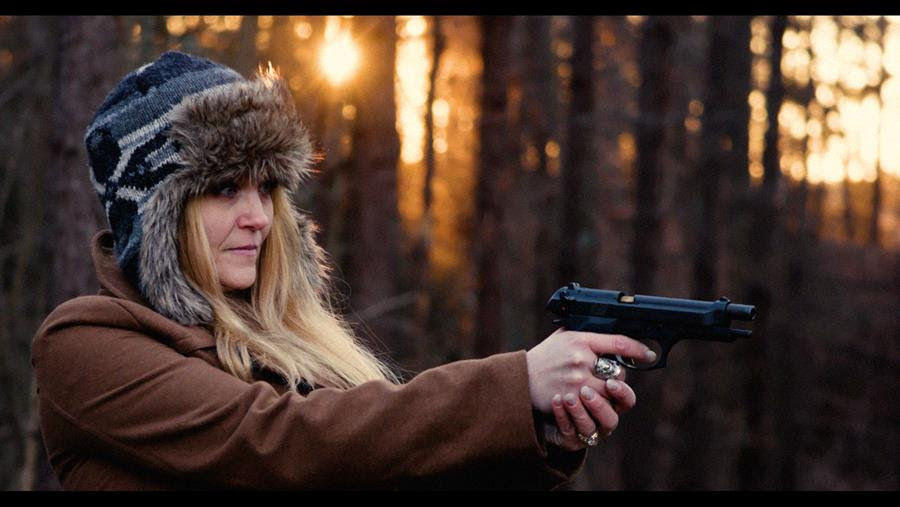
Jennifer works the fish spot with an energy that feels both genuine and precarious. You can see her potential. You can see the spark. But you can also see the fragility. What starts as something temporary — a job, a stepping stone, a place to regroup — quietly becomes years of life. The documentary never judges her. It simply observes the slow drift that happens when survival mode becomes routine.
Then there’s JD — military veteran, former addict, ex-con, husband, father — a man who has lived multiple lives in one lifetime. Where Jennifer’s arc feels combustible, JD’s feels reflective. He carries a kind of late-stage clarity. Not perfection. Not redemption. Just awareness. He seems almost surprised to still be here, and that humility gives his presence weight.
Clovers was shot in 2016, during the first Trump-Clinton election cycle, but it might as well be 1996 or 2026. The political backdrop hums quietly underneath the surface — not as a thesis statement, but as environmental noise. You’re reminded that while cable news debates ideology, people in places like Asheboro are simply trying to survive another week.
And here’s what the film does exceptionally well: it avoids turning its subjects into caricatures.
There’s no heavy-handed race discourse. No exaggerated poverty porn. No “look at these broken people” framing. The South in Clovers feels lived-in. Complex. Tired. Human. When you’re in communities scraping by together, ideology becomes secondary to paying rent.
The film also forces a larger conversation about gambling’s evolution. We’ve moved from bingo halls and lottery tickets to mobile sportsbooks, prediction markets, and algorithm-driven instant gratification. Accessibility has exploded. The next five years are going to reveal the social consequences — especially among young men chasing dopamine and women chasing a momentary escape.
The tragedy isn’t that people gamble.
The tragedy is why they gamble.
Hope. Escape. Reinvention. Control.
These machines aren’t built to pay out consistently — they’re built to keep people engaged. And yet, not everyone is hooked by the game. Some are hooked by circumstance. By loneliness. By stagnation. By the illusion of mobility in a system that rarely offers it.
What struck me most is that nothing here feels abnormal. That’s the unsettling part. I live in St. Louis. I can drive 30 minutes in any direction and find versions of this same strip mall ecosystem. Southern Missouri. Southern Illinois. Kentucky. Tennessee. It’s everywhere.
And it will stay everywhere until we confront generational trauma, economic design, and the psychology of control baked into our systems.
Clovers doesn’t scream. It doesn’t indict. It doesn’t posture.
It reminds.
And sometimes reminders are more powerful than revelations.
This is a strong, sobering documentary — not because it shocks you, but because it confirms what you already know about America’s gray zones.
Slamdance continues to be one of the few festivals willing to platform films that quietly dissect the American condition without romanticizing or demonizing it.
Clovers is a necessary mirror.
And whether people like what they see in it is another story entirely.
3/5.



The review of Clovers really captures how easily the gambling gray zone blurs personal boundaries—such a nuanced take on that moral ambiguity. It made me think about how finding the right rhythm in any creative project, like nailing the exact tempo of a track, requires that same careful attention to detail. For that, I've been using BPM finder online as a free BPM finder to keep my mixes tight.
This webpage is outstanding Wacky Flip. Your composition was delightful to peruse. This document is exceptional for my purposes.