


SXSW 2026 Review: Drag

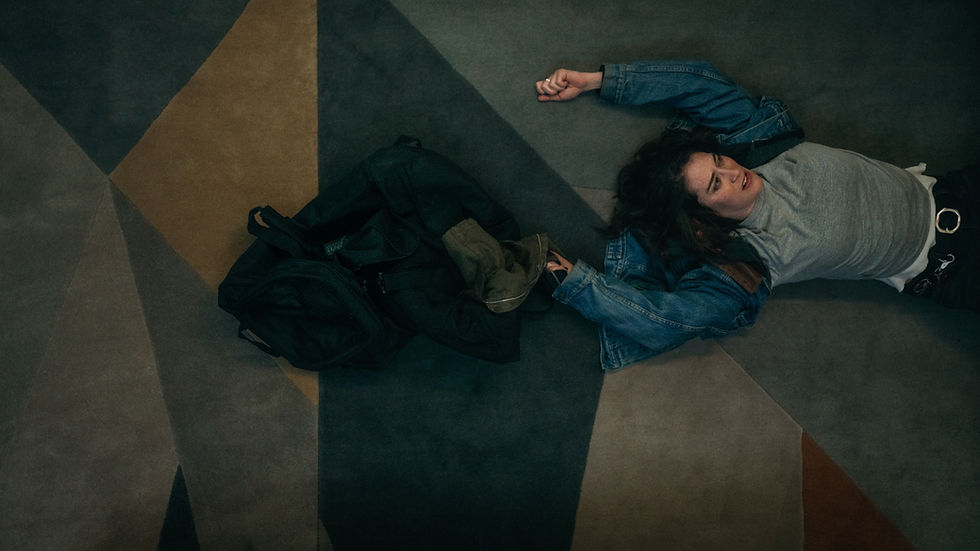
At this year’s Midnighters lineup at South by Southwest, one of the more unpredictable entries came in the form of Drag from Raviv Ullman and Greg Yagolnitzer, a chaotic heist thriller that gradually mutates into something darker, stranger, and far more disastrous than anyone in the story could have anticipated.
Directed with a gleeful sense of escalating catastrophe, Drag stars Lizzy Caplan and Lucy DeVito as sisters whose poorly conceived break-in quickly spirals out of control. What begins as a revenge-fueled home invasion takes a sharp turn when Caplan’s character suddenly throws out her back mid-crime. Anyone who has experienced that kind of lower-back failure knows exactly how debilitating it can be, turning even the most basic movements into a painful ordeal.
That injury becomes the film’s central ticking clock.
With one sister immobilized and the plan collapsing in real time, the duo scrambles to figure out how to escape the house before its owner returns. Unfortunately for them, the homeowner is played by John Stamos, portraying an eccentric and darkly imaginative artist whose lifestyle—and secrets—turn the situation from bad to far worse. Complicating matters further is his date for the evening, played by Christine Ko, whose arrival only fuels the film’s growing sense of chaos.
From there, Drag becomes the cinematic equivalent of a domino chain collapsing in slow motion. Every attempt to solve the problem seems to create two new ones. Each moment that feels like relief instead triggers another turn in the downward spiral.
And yet, the film never loses its sense of humor.
There’s a dark comedic energy running through Drag that keeps the tension from becoming oppressive. The absurdity of the situation—trying to navigate a crime scene while physically incapacitated—allows the filmmakers to explore both suspense and physical comedy at the same time. Caplan, in particular, delivers a standout performance, having to convey frustration, fear, and determination while largely limited by the character’s physical condition.
The film also benefits from its willingness to lean into the ridiculousness of its premise. Rather than trying to ground every moment in realism, Drag embraces the idea that sometimes life throws a pile of lemons at you—and there’s absolutely no way to turn them into lemonade.
That said, the film isn’t without a few bumps along the way. The opening stretch takes a little time to find its rhythm, and the chemistry between Caplan and DeVito initially feels uneven. It’s difficult at first to fully buy into their dynamic as sisters. But as the story progresses and the characters are forced into increasingly desperate situations, the bond between them becomes far more convincing.
There’s also the matter of the film’s twists. While the story certainly delivers surprises, a few of the turns feel slightly telegraphed, where allowing the audience a bit more interpretive space might have made those moments land harder.
Still, those issues don’t significantly derail the experience.
What Drag ultimately succeeds at is delivering a wildly entertaining disaster narrative—one where everything that can go wrong absolutely does. The cast commits fully to the escalating madness, and the film’s blend of suspense, comedy, and horror-adjacent tension makes it a memorable entry in the Midnighters program.
With recognizable talent and a premise that audiences can immediately latch onto, Drag feels primed to travel well on the festival circuit and could easily find a receptive audience once distribution lands.
Rating: 3 out of 5
Drag is messy in all the right ways—a spiraling heist-gone-wrong thriller that finds humor and horror in the absolute worst day imaginable.


Thanks for sharing your info. I really appreciate your efforts and I will be waiting for your further write Pelle Pelle Collections
Great write-up on Drag! SXSW Midnighters always bring the most chaotic and entertaining stories. Movie premieres like this, especially with recognizable leads like Lizzy Caplan and Lucy DeVito, are prime examples of film projects that benefit from smart indie marketing. Handing out enamel promotional pin badges of the movie's logo or iconic moments at festival screenings would be such a cool collectible for horror and dark comedy fans to take home.
This sounds like such a fun mix of dark comedy and chaos! The moment the Cincinnati SEO services goes completely off the rails because of a thrown-out back is both hilarious and painfully relatable.
What a wonderful photo gallery showcasing happy students, dedicated staff, and strong parental involvement. Quilted Biker Jacket It's inspiring to see a school community working together to create memorable learning experiences for every child.
This is the best post I have ever seen. Very clear and simple. Mid-portion Is quite interesting though. Keep doing this. I will visit your site again. johnny knoxville jacket