


SXSW 2026 Review: Ugly Cry Explores Trauma, Ambition and the Pressure to Perform


SXSW 2026 Review: Ugly Cry
In recent years, horror has increasingly turned toward the grotesque spectacle of transformation—beauty standards pushed to monstrous extremes, fame consumed through grotesque imagery, and bodies warped in the name of ambition. But Ugly Cry, the new film written, directed by and starring Emily Robinson, approaches that territory from a far more grounded and unsettling perspective. Instead of spectacle, it focuses on the emotional and psychological pressure that drives people to break themselves in pursuit of success.
Premiering at SXSW 2026, Ugly Cry follows a young actress with all the necessary ingredients for success—talent, charisma and opportunity—yet she finds herself blocked by something deceptively simple. For a major role she desperately wants, her audition requires a convincing emotional breakdown, a moment where she must cry on command. What begins as a technical challenge slowly becomes an obsession.
Robinson’s character embodies a reality familiar to anyone chasing a career in the creative industries. Even when someone appears fully equipped to succeed, the smallest perceived flaw can become an overwhelming psychological obstacle. That internal voice—the one whispering doubt and feeding imposter syndrome—can become louder than any praise or encouragement.
As the story unfolds, Ugly Cry becomes less about acting technique and more about the emotional baggage that fuels performance. Robinson crafts a narrative where the pursuit of authenticity on screen forces the character to confront unresolved trauma she has carefully avoided addressing in her personal life. The film suggests that creativity itself can become a kind of Pandora’s box—once opened, it forces painful memories and buried emotions to the surface.
What makes Ugly Cry particularly effective is how it frames this struggle within the broader pressures of modern visibility. In an era defined by constant self-presentation—where social media acts as a permanent stage—young artists are often forced to perform versions of themselves long before they’ve fully understood who they are. That pressure can lead to destructive habits, self-sabotage and deeply unhealthy coping mechanisms.
Robinson approaches these themes with an intimacy that keeps the story grounded in emotional realism. The film touches on betrayal, strained relationships and the absence of reliable support systems—factors that can make the pursuit of success feel isolating rather than empowering. When the people who are supposed to offer stability instead contribute to that instability, the path forward becomes far more dangerous.
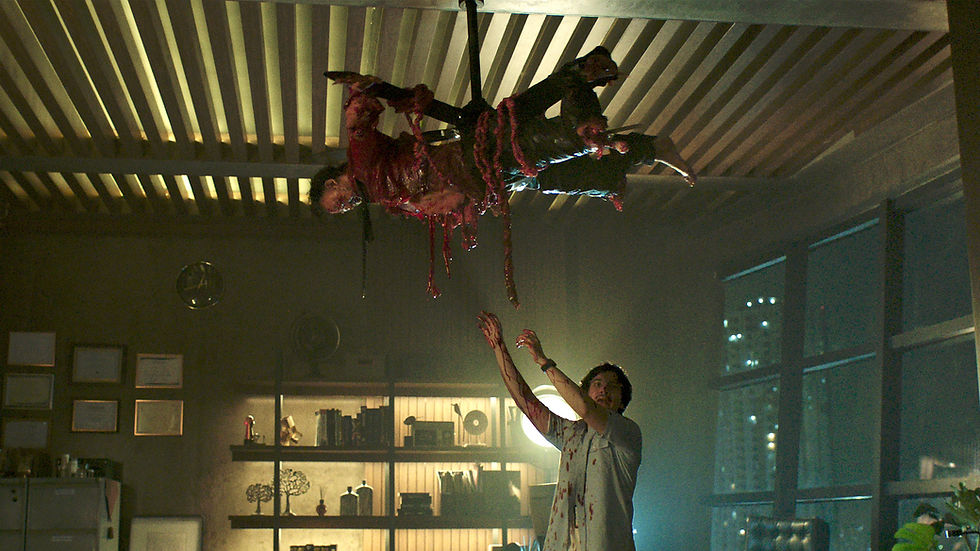
While the film flirts with body-horror imagery and unsettling psychological territory, its power comes from how recognizable the struggle feels. The character’s desperation to get something “perfect” reflects a generation raised on relentless comparison and constant evaluation. The fear of failure doesn’t just threaten career ambitions—it threatens identity itself.
Ultimately, Ugly Cry functions as a coming-of-age story wrapped in psychological horror. It’s about what happens when ambition collides with unresolved trauma, and how the act of performance can sometimes force individuals to confront parts of themselves they’d rather keep buried.
For Robinson, the result is an intimate, emotionally raw portrait of a young woman navigating the fragile boundary between self-discovery and self-destruction. The film doesn’t rely on shock value to leave its mark. Instead, it builds tension through vulnerability, asking audiences to consider what it truly costs to succeed in industries built on constant emotional exposure.
In the end, Ugly Cry serves as a reminder that trauma rarely disappears just because we ignore it. It waits patiently beneath the surface, ready to return at the most inconvenient moment—and when it does, the confrontation is rarely pretty.
Rating: 3.5 out of 5
Written & Directed by: Emily Robinson
Cast: Emily Robinson, Ryan Simpkins, Aaron Dominguez, and Robin Tunney


One of the spin-off games from the Geometry Dash series is geometry dash subzero. The game was initially created to highlight new features that will soon be added to the main game with the much anticipated Update 2.2. With three additional levels and whole new animation effects, gamers will have plenty of opportunities to become enthralled in the meantime!