


What Happened To Doris? Review | Fantastic Fest 2026

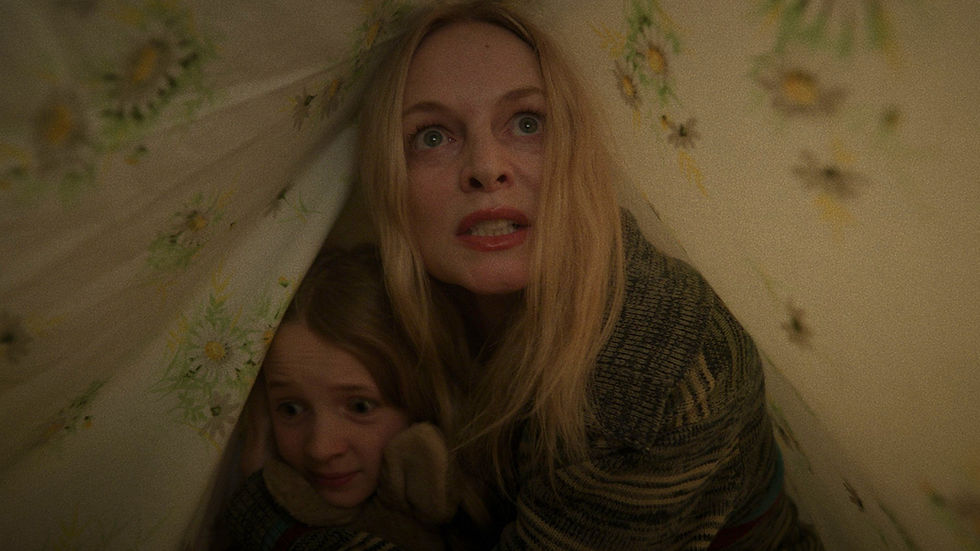
It is almost impossible for a new supernatural horror film based on an alleged real-life haunting to arrive without inviting comparisons to The Conjuring. What Happened to Doris? makes that comparison particularly easy. There is the 1970s setting, a working-class family, paranormal investigators and increasingly disturbing events unfolding inside a home.
But reducing Nick Simon’s film to another variation on that formula overlooks what makes Doris’ story interesting in the first place.
Horror Movies Uncut caught What Happened to Doris? during Fantastic Fest 2026 after speaking with Simon and stars Heather Graham and Mimi Rogers on the red carpet. By then, comparisons to The Conjuring had already followed the film through the festival. Some are understandable, right down to the period presentation and even aspects of the film’s promotional lettering, but Simon’s movie works better when approached as a grounded account of a woman attempting to convince the people around her that something is happening inside her home.
Set in California in 1974, the film immediately establishes its era through familiar details rather than excessive nostalgia. Old cars fill the streets, mothers work second shifts, kids smoke questionable weed and the homes, clothes and routines belong unmistakably to the period.
That familiarity is important because what is happening to Doris is anything but ordinary.
Heather Graham plays Doris, a mother raising several children while facing circumstances that leave plenty of room for people around her to question what she claims to be experiencing. Is something supernatural actually happening? Is stress beginning to overwhelm her? Could there be an explanation rooted in her mental health?
Those questions become considerably more uncomfortable when Doris claims that the entity tormenting her has sexually assaulted her.
It’s here that What Happened to Doris? finds its most interesting material. The film isn’t simply asking whether ghosts exist. It is also confronting what happens when a woman makes an extraordinary claim at a time when there are plenty of reasons for the people around her to dismiss her before seriously considering what she has to say.
Simon and his screenplay don’t turn Doris into a helpless figure waiting for someone else to rescue her. Graham plays her as a woman doing what she can to keep her family together under increasingly impossible circumstances. There is an awareness throughout the film of the pressures surrounding motherhood, gender and credibility during the period without the story planting a flag and turning those ideas into an overt thesis.
The tradeoff is that What Happened to Doris? doesn’t always dig as deeply into those elements as it could.
There are potentially fascinating layers surrounding why Doris finds herself in this position and why those around her respond the way they do. The film acknowledges them, but its attention remains primarily on the haunting: what is happening inside the house, what Doris is experiencing and, eventually, what other people begin experiencing themselves.
That keeps the movie moving but leaves some of its richest character material slightly underdeveloped.
As the supernatural occurrences increase, Simon demonstrates welcome restraint.
There is no attempt to inflate every incident into a massive horror set piece simply because contemporary audiences may expect one. The scares generally arrive where they should, the effects remain convincing without overwhelming the characters and the film avoids turning the alleged events into something larger than the story requires.
That restraint becomes one of its strengths.
There is an understandable temptation when adapting a supposedly true supernatural story to keep escalating until the movie resembles a theme-park version of the events that inspired it. What Happened to Doris? largely avoids that problem. Its attention to period detail and relatively grounded approach allow the stranger moments to feel like intrusions into an otherwise recognizable family life.
Mimi Rogers’ Dr. Ross also represents the changing way these experiences are beginning to be examined. Paranormal investigation is emerging through university programs and other attempts to approach unexplained phenomena with something resembling methodology rather than immediately relegating them to folklore.
Within that context, Doris’ case feels less like another chapter in an established supernatural universe and more like part of a period when people were still attempting to determine how these experiences should even be discussed.
That distinction matters when considering the inevitable Conjuring comparisons.
The films occupy some of the same visual and thematic territory because their stories emerge from similar periods and cultural circumstances. Houses looked a certain way. Clothes looked a certain way. Families lived differently. Paranormal research was developing differently. Similarities in production design or atmosphere don’t automatically mean the movies are attempting to accomplish the same thing.
What Happened to Doris? is more interested in dropping viewers into Doris’ circumstances than constructing an elaborate supernatural mythology around her.
That approach may also limit its appeal for audiences expecting a relentless haunted-house experience. This isn’t likely to be the most exciting horror watch of the year for viewers primarily interested in escalating scares and large supernatural sequences.
But excitement isn’t necessarily the metric that serves this particular story best.
The film is solid, appropriately restrained and convincing enough in its presentation of the alleged events to justify the journey. Simon understands that there is no reason to make Doris’ story bigger simply because cinema allows him to do so.
The result is a supernatural drama that works best when allowed to exist outside the shadow of more commercially familiar haunting franchises. There are opportunities for greater depth that the movie doesn’t fully pursue, but the story remains grounded, the performances keep its human stakes intact and the horror rarely reaches beyond what the material needs.
Give What Happened to Doris? enough room to be its own movie rather than immediately measuring it against The Conjuring, and there is plenty here worth appreciating.
HMU Rating: 3/5
Reviewed as part of Horror Movies Uncut's Fantastic Fest 2026 coverage in Austin, Texas.
WATCH MORE HORROR ON BLOODSTREAM

Looking for your next horror watch? Explore Bloodstream, an HMU streaming partner, for independent horror, cult discoveries, and more.
Affiliate disclosure: Horror Movies Uncut may earn a commission when you subscribe through this link, at no additional cost to you.


Comments