


ÜREI Review | Fantastic Fest 2026


There is something inherently unsettling about being young, removed from everything familiar and placed under the care of an aging relative in the middle of nowhere.
Urei understands that fear very well.
One of Horror Movies Uncut’s early Fantastic Fest 2026 watches, the Kazakhstan-set horror film begins with a relatively familiar situation. Camila is sent to stay with her grandmother, Amina, in rural Kazakhstan. There is teenage rebellion, frustration and the generational disconnect that comes with a young person suddenly being placed under the authority of someone much older.
Then things begin to change.
What starts as a family drama gradually descends into nightmare fuel, and the easiest comparisons that immediately come to mind are Misery and The Visit. Not necessarily because Urei is recreating either film, but because it understands how quickly the relationship between caretaker and dependent can become terrifying when isolation removes the possibility of escape.
The movie also taps into something considerably more uncomfortable than its supernatural elements.
Aging is scary.
Watching someone you love become physically or mentally different because of age can be frightening for everyone involved. Whether the audience interprets some of Amina’s behavior through dementia, Alzheimer’s disease, grief, cognitive decline or something more sinister, Urei uses those anxieties to complicate the relationship between grandmother and granddaughter.
That gives the horror an emotional foundation.
There is also a broader generational question underneath the film. Parents have long relied on grandparents to help raise, discipline and care for children, but Urei asks what happens when an aging relative may no longer be capable of carrying that responsibility.
It is an interesting theme because it travels well beyond Kazakhstan.
The geography, traditions and family dynamics may be culturally specific, but the central conflict is recognizable almost anywhere. Families age. Children become teenagers. Parents become overwhelmed. Grandparents become caregivers. Eventually, the people who once took care of everyone else may need someone to take care of them.
Urei turns that cycle into horror.
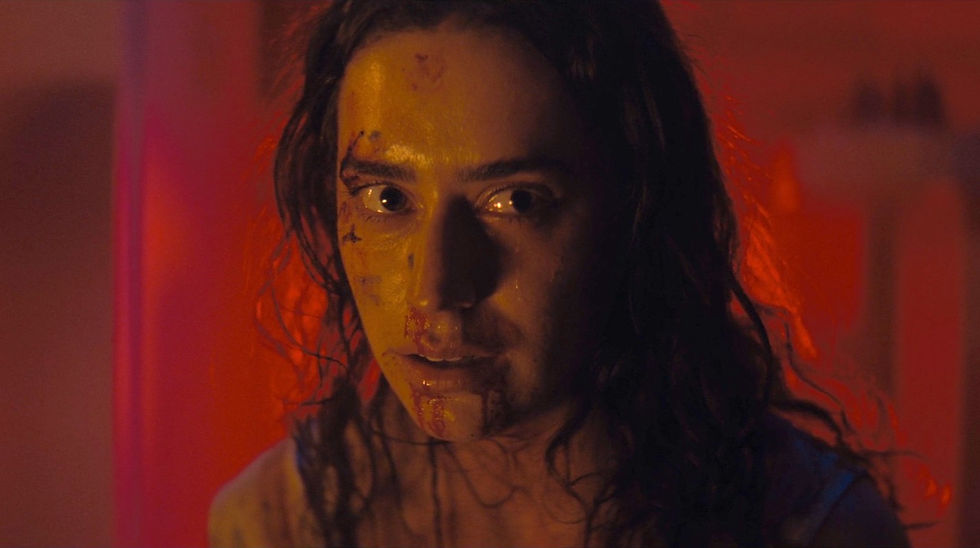
Visually, the film is extremely well constructed. There are moments that recall the look and atmosphere of European and Spanish genre cinema from the early and mid-2000s, particularly in the way the rural environment is photographed.
The isolation matters.
This isn’t simply a house where strange things happen. The surrounding landscape reinforces the feeling that Camila has been removed from the world she understands and placed somewhere governed by different expectations and increasingly frightening rules.
And what she eventually endures is brutal.
Without getting into spoilers, Urei contains imagery capable of pushing viewers toward genuine physical discomfort. There are moments where disgusting is probably the most accurate description, and the film isn’t afraid to stay with that discomfort.
That brutality works because Camila remains sympathetic.
The deeper she gets into the situation, the easier it becomes to feel for both her and her grandmother. That is one of the movie’s more interesting accomplishments. Amina isn’t simply reduced to a horror device. There is sadness surrounding her as well, and the film leaves room for the audience to consider what has happened to this woman and how much control she actually has over it.
The characters who become more difficult to sympathize with are the adults who created the situation in the first place.
That adds another layer to the film’s ideas about responsibility.
Still, Urei does run into one familiar genre problem.
Horror has spent a lot of time turning elderly people into sources of fear. The contrast is easy to understand. Audiences are conditioned to associate grandparents with safety, warmth and vulnerability, so reversing that image can produce immediate discomfort.
But it has also become increasingly familiar.
That familiarity keeps Urei from feeling completely fresh, even when the filmmaking surrounding the concept is effective. There are moments where audiences who have seen enough horror involving aging relatives may recognize some of the machinery underneath the story.
Fortunately, the cultural setting, visual approach and emotional material give the film enough personality to separate it from being another simple variation on the scary-grandparent formula.
Writer-director Yerkezhan Baizhan has made something that can operate as supernatural horror while still functioning as a story about aging, grief, family obligation and generational responsibility.
That combination makes Urei one of the more interesting sleepers heading into Fantastic Fest 2026.
It may not arrive with the profile of the festival’s biggest premieres, but this feels like exactly the kind of movie that can generate conversation once audiences begin discovering it.
It is disturbing, visually assured and willing to make its audience uncomfortable while exploring fears that have very little to do with monsters.
Sometimes the most frightening thing isn’t whatever might be hiding inside the house.
Sometimes it’s realizing the person who was supposed to take care of you may need someone to take care of them instead.
Urei is a strong Fantastic Fest discovery and another reminder that some of the festival’s most interesting horror can come from well outside the films receiving the most attention.
Just maybe think twice before sending the kids to grandma’s house.
3.5 out of 5


Comments