


Affection Review: Jessica Rothe Anchors a Smart but Familiar Sci-Fi Horror


Review: Affection (2026)
There’s a growing inevitability to Jessica Rothe’s trajectory—she’s no longer just recognizable, she’s dependable. In Affection, that dependability turns into something sharper, more controlled, and at times, unsettlingly raw.
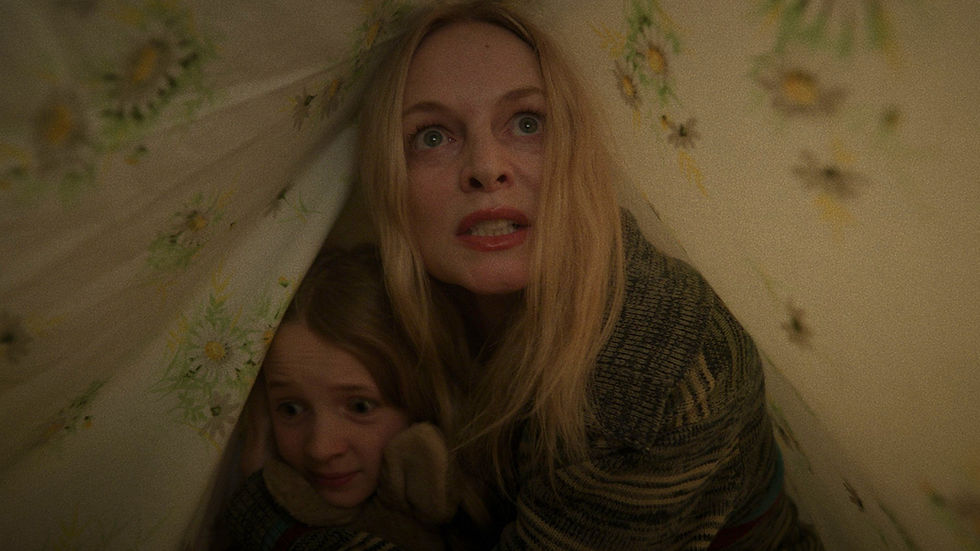
Directed by debut filmmaker BT Mezza, Affection operates inside a familiar genre framework—psychological horror with a sci-fi undercurrent—but leans heavily on performance to elevate its core premise. The film follows a woman who wakes up disoriented, detached from her surroundings, her husband, and even her child. What she’s told is simple: a traumatic accident fractured her memory. What she feels is something far more complicated—and far less trustworthy.
From the outset, Affection thrives on misdirection. It keeps the audience in a constant state of recalibration, forcing you to question not just what’s happening, but how much of it you’re willing to believe. That tension is where the film finds its rhythm.
Rothe delivers one of her most grounded performances to date. Known for her work in Happy Death Day, she pivots here into something more maternal, more internal, and far less performative in the traditional “final girl” sense. There’s a quiet intensity in how she processes fear, confusion, and instinct—less about spectacle, more about erosion. It’s a performance that reinforces what’s already been clear: in the right role, she can carry a film without needing it to bend toward her.
Opposite her, Joseph Cross brings a calculated duality. He’s effective in that uneasy middle ground—approachable on the surface, but with just enough ambiguity to keep you questioning his intentions. It’s a dynamic that works, especially within a narrative built on doubt.
And then there’s Julianna Layne, whose presence adds emotional weight without overplaying it. For a film this contained—small cast, limited locations—it’s essential that every performance lands. For the most part, they do.
Where Affection begins to show its seams is in the writing. The film introduces strong ideas—identity, perception, technological intrusion—but doesn’t always trust itself to fully explore them. As the story unfolds, certain narrative turns become more predictable than they should be, especially for a film built on mystery. You start to see the shape of the reveal before the film is ready to show it.
That predictability doesn’t derail the experience, but it does flatten some of the impact. You’re still invested—you want confirmation, you want resolution—but the tension shifts from discovery to validation.
To Mezza’s credit, the film squeezes a surprising amount of texture out of its limitations. There are moments—brief but effective—where Affection leans into a subtle cyberpunk edge, layering its horror with a more speculative, almost dystopian tone. It’s not dominant, but it’s enough to give the film an identity beyond its immediate setup.
The more significant issue lies in character continuity. While motivations within the moment feel justified, the broader trajectory of certain characters—particularly Rothe’s—raises questions. There’s a disconnect between who these people are presented as and how their decisions ultimately align with that identity. It’s not a collapse, but it’s noticeable, especially if you’re tracking character logic beyond the immediate scene.
Still, Affection remains a solid entry in the horror sci-fi space. It’s a film that understands how to engage its audience, even if it occasionally shows its hand too early. More importantly, it proves that Mezza has a strong instinct for tone and performance—two things that matter far more than scale in this lane.
Final Verdict: 3.5/5
Affection doesn’t reinvent the genre, but it executes with enough precision—and anchored by a standout performance from Rothe—to make it worth your time when it hits theaters May 8.


It's a different kind of tension from playing stick war, but both make you question what's real, you know?
Really enjoyed reading this thoughtful review of Affection — it’s such a smart, atmospheric sci-fi horror anchored brilliantly by Jessica Rothe. The film leans into familiar genre tropes but still nails the tense, unsettling mood around identity, memory, and hidden unease, and Rothe’s restrained, layered performance carries the whole story perfectly. It’s not groundbreaking, but it’s a tightly crafted watch for anyone who loves slow-burn sci-fi horror with psychological depth.
If you’re into picking fitting, meaningful Chinese names for movie characters or fictional personas, I highly recommend checking out https://chinesenamegeneratormale.com/ — it makes finding culturally authentic, well-balanced male Chinese names quick and effortless.