


The Wolf and the Lamb Review: A Gritty Western Horror With Strong Ideas

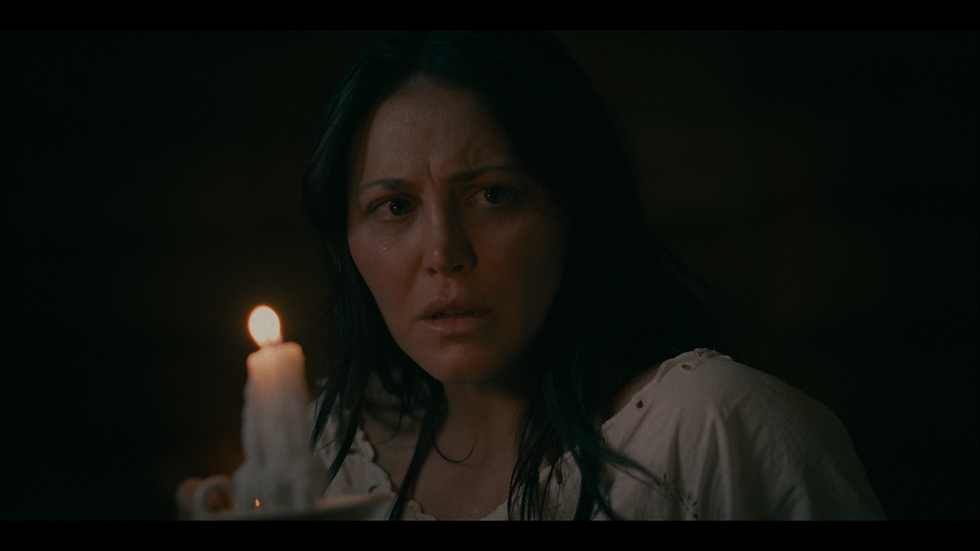
Review: The Wolf and the Lamb Blends Western Horror With Strong Ideas That Feel Unevenly Realized
Period horror doesn’t get enough space to breathe, especially when it leans into early American settings and folklore. The Wolf and the Lamb, directed by Michael Schliff, steps into that lane with a supernatural Western that aims to merge frontier storytelling with horror elements rooted in fear, loss, and transformation.
The film stars Adrianne Palicki, Clint Howard, Eric Nelson, and Zach McGowan, and centers on a mining town where children begin to disappear under mysterious circumstances. At the core of the story is a mother whose son becomes one of the missing—only to return changed.
That setup places the film in familiar territory, echoing themes seen in stories about identity, possession, and the fear of something coming back wrong. Where The Wolf and the Lamb separates itself is in its attempt to ground that idea within a Western framework.
The strongest aspect of the film is its commitment to being character-driven.
There’s a clear effort to build out the environment—its people, its tension, and the underlying fears tied to that era. The film leans into the isolation of frontier life and the uncertainty that comes with it, which works in its favor. It’s a style of storytelling more often seen in long-form television, and it gives the film moments that feel deliberate and patient.
At its best, the film captures that balance between human drama and supernatural unease.
Where it becomes less steady is in defining what the central threat actually is.
The narrative introduces multiple directions—missing children, rising body counts, and hints at something supernatural—but those elements don’t always feel unified. Instead of building toward a clear sense of dread, the film shifts between possibilities without fully committing to one, which makes the tension feel inconsistent.
There are also moments where the thematic elements—classism, poverty, and bigotry—feel more like additions than foundations. They’re present, but not always fully integrated into the story in a way that strengthens the narrative.
From a technical standpoint, there’s a mix of effective and uneven choices.
The film uses smart camera placement and lighting to create atmosphere, especially in confined or low-lit settings. But some of the visual effects don’t always align with the tone the film is aiming for, creating moments where the illusion breaks.
Dialogue is another area where the film occasionally loses its footing. Certain lines feel more modern than the setting suggests, which can pull attention away from the period authenticity the film is trying to establish.
Even with those inconsistencies, there’s still a lot here that works.
The performances hold the film together, the setting is effective, and the ambition to tell a horror story within a historical framework is something that stands out. There’s a clear appreciation for the genre and the time period, even if all the elements don’t fully connect.
For viewers who enjoy Western horror and character-driven stories, The Wolf and the Lamb offers enough to stay engaged, especially for those looking for something outside the more modern horror cycle.
Score: 3/5


The review mentioning how The Wolf and the Lamb blends frontier horror with themes of loss really caught my eye, but that 3/5 score shows its supernatural threats feel uneven - honestly this brainrot merge of Western and horror genres is what I'd love to discuss over coffee after seeing the trailer pop up on my late-night scroll!