


The Terror: Devil in Silver Review: AMC’s Urban Nightmare Is Bleak, Broken, and Haunted


Review: The Terror: Devil in Silver (Season 3)
AMC’s The Terror returns for its third season with Devil in Silver, a grim, psychologically unstable descent into institutional horror that swaps icy isolation and historical dread for something dirtier, meaner, and far more urban.
And honestly, that change works in the show’s favor.
This newest chapter stars Dan Stevens alongside an ensemble cast that includes Judith Light, CCH Pounder, Aasif Mandvi, Marin Ireland, Stephen Root, and Chinaza Uche, with the season executive produced by Ridley Scott and spearheaded creatively by Chris Cantwell, Victor LaValle, and Karyn Kusama, who directs the first two episodes.
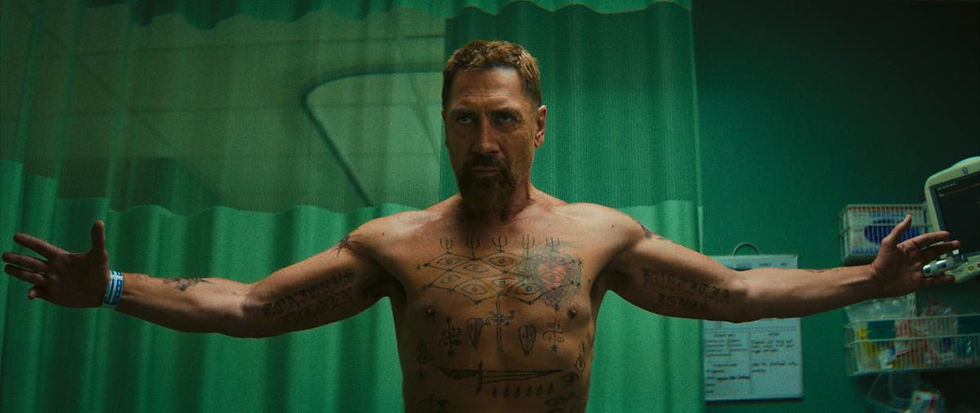
The season follows Pepper, played by Stevens, a struggling former drummer trying to hold together a collapsing relationship and unstable life. After a violent confrontation spirals out of control, Pepper is forcibly placed inside a decaying psychiatric facility that immediately feels wrong from the moment he enters it.
Not haunted house wrong.
Forgotten-by-society wrong.
And that distinction matters.
Unlike previous seasons of The Terror, which leaned heavily into historical environments and period dread, Devil in Silver feels grounded in urban neglect and bureaucratic abandonment. The hospital itself becomes one of the strongest aspects of the season. It’s filthy, exhausted, overcrowded, and spiritually dead long before any supernatural entity reveals itself.
That atmosphere carries the entire show.
As Pepper begins uncovering the horrifying presence known as the “Devil in Silver,” the season slowly reveals that the true terror may not simply be the entity itself, but the way vulnerable people are discarded inside systems designed to forget them. Patients drift through the halls heavily medicated, emotionally fractured, and largely abandoned by the outside world.
And honestly, that emotional decay becomes more unsettling than many of the overt horror moments.
There’s a strange paradox at the center of the narrative. Some people appear able to leave the facility freely, while others become trapped emotionally, psychologically, or spiritually inside it. The show intentionally glosses over certain logistical realities in favor of atmosphere and metaphor, which will either work for viewers or frustrate them depending on how much realism they expect from the premise.
But thematically, the approach makes sense.
The hospital operates less like a literal institution and more like a doom-looped purgatory where trauma, addiction, mental illness, and supernatural corruption feed off one another.
And visually, the urban setting is refreshing.
Too many supernatural horror stories still default to isolated mansions, old castles, or rural folklore. Devil in Silver instead embraces run-down city infrastructure, forgotten buildings, bureaucratic collapse, and neglected human beings. There’s something deeply effective about placing evil inside a decaying psychiatric ward that society itself no longer seems interested in saving.
That’s where the season feels strongest.
Performance-wise, Stevens does solid work balancing frustration, instability, and vulnerability. Chinaza Uche delivers one of the more memorable supporting performances as Kofi, while Judith Light and CCH Pounder bring gravitas that helps stabilize the heavier psychological material.
The biggest issue with the season is scope.
There’s a tremendous amount of mythology, emotional trauma, and institutional horror packed into the narrative, and at times it feels like the show struggles to fully piece everything together cleanly by the finale. Some additional expansion outside the hospital environment may have helped broaden the stakes and deepen the world-building.
Still, the atmosphere alone carries much of the experience.
There’s a suffocating sadness hanging over Devil in Silver that separates it from more conventional supernatural horror. The show understands that abandoned places are terrifying because abandoned people are terrifyingly real.
And if evil exists anywhere, it probably would exist in places society stopped paying attention to long ago.
Final Verdict: 3/5
The Terror: Devil in Silver trades historical horror for urban institutional dread, delivering a psychologically heavy season filled with strong performances, oppressive atmosphere, and unsettling ideas about neglect, trauma, and forgotten people. It doesn’t always stick the landing narratively, but its environment and emotional weight make it a compelling entry in AMC’s ongoing horror anthology series.


Comments